
Recycle your batteries safely in Te Awa Kairangi ki Tai Lower Hutt.
A battery recycling collection service is now available at selected Hutt City Council neighbourhood hubs, helping you safely dispose of used household batteries.
You can drop off your household batteries at these locations:
- Hutt City Council administration building
- Eastbourne Neighbourhood Hub
- Kōraunui Stokes Valley Neighbourhood Hub
- Naenae Neighbourhood Hub
- Wanuiomata Neighbourhood Hub
- Walter Nash Neighbourhood Hub
- War Memorial Library Neighbourhood Hub
Just look for the clearly marked battery collection units at each site. If the service is successful, we’ll add recycling units to more locations.
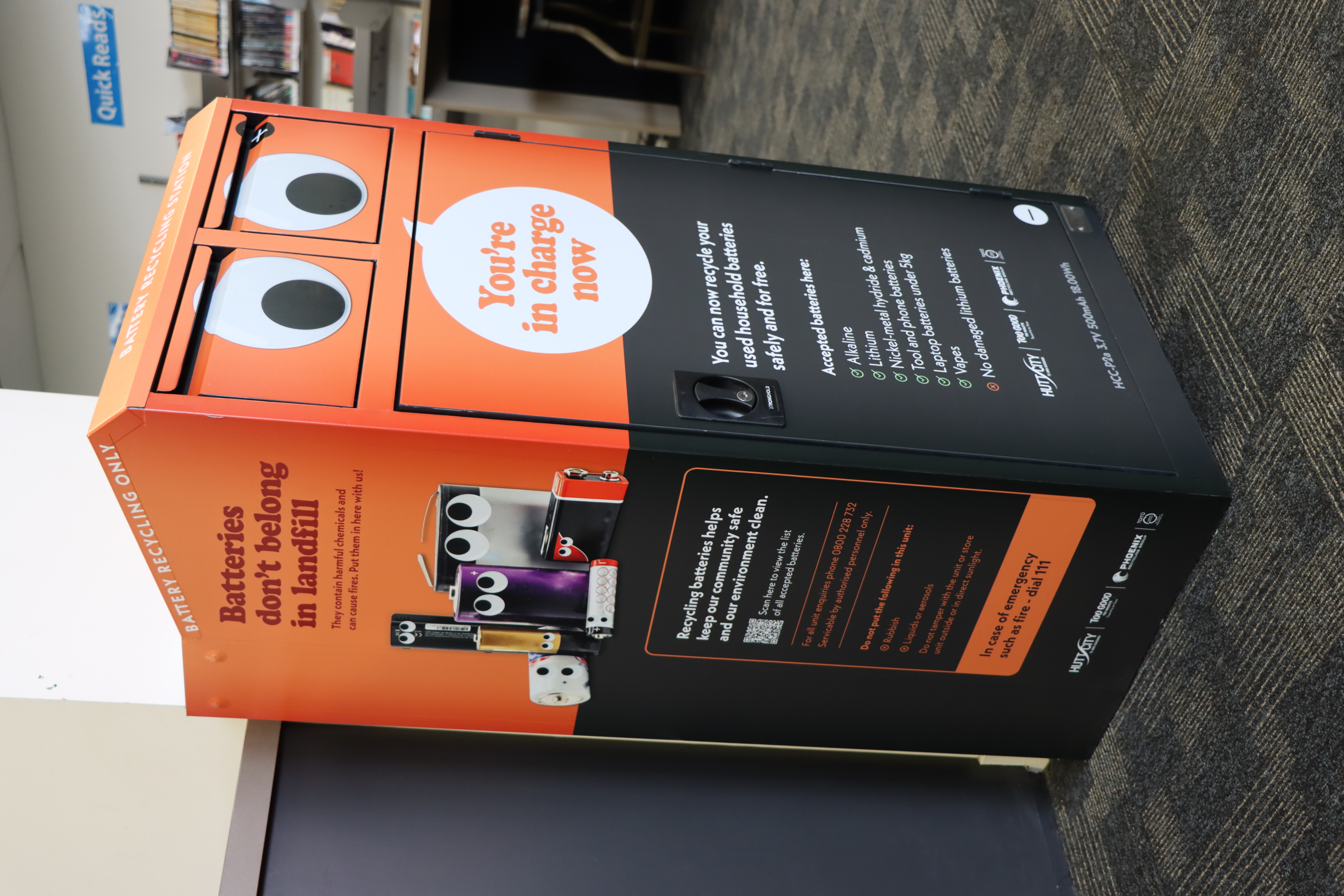
What batteries are accepted?
You can recycle the following household battery types (up to 5kg each):
- Alkaline batteries
- Lithium-ion batteries
- Lithium metal (Primary) batteries
- Lithium metal (button) batteries
- Lithium Phosphate batteries
- Nickel-metal hydride (NiMH)batteries
- Nickel-cadmium (NiCd) batteries
- Lithium primary embedded batteries Lithium-ion embedded batteries
Find out more about the types of batteries that are accepted.
Damaged batteries, car and other large batteries are not accepted and they can't go in your rubbish or recycling bin because of the risk of fire. Large batteries can be dropped off for free at Silverstream Landfill. Southern Landfill in Wellington is the only site in the region that accepts up to 20kg of hazardous household waste, including damaged batteries.
Why recycle batteries?
Improper disposal of batteries in kerbside bins or landfill is dangerous and harmful to our environment:
- Batteries contain chemicals that can leak into soil and waterways if not properly disposed of or recycled.
- Damaged batteries can cause fires in your bin, rubbish and recycling trucks and facilities.
- Many battery components are recyclable – keeping valuable materials out of landfill.
Safe and responsible disposal
Phoenix Recycling Group has designed purpose-built battery collection units for the safe disposal of batteries and embedded battery devices. Features include:
- A tamper -resistant collection system
- Fitted with fire suppression and heat sensor technology
- Connected to 24/7 monitoring
- Each unit contains UN rated fire-resistant liners and DG rated cartons
Working Toward a Zero Waste Lower Hutt
This service is a key step in our roadmap toward a circular economy and it’s part of our broader commitment to:
- divert resources from landfill
- sustain our natural resources in the long-term
- make positive changes for the environment
- create additional benefits for our people and the economy
Frequently asked questions
Yes – you can bring your batteries during normal hub opening hours.
Please place batteries loosely into the collection unit. If possible, tape over terminals of lithium or rechargeable batteries.
All batteries collected through this service will be transported to Phoenix Recycling Group’s dedicated battery export yards in Auckland and Christchurch. At these facilities, batteries are sorted, segregated by chemistry, and packaged in accordance with relevant regulations in preparation for export under an Environmental Protection Authority approved Hazardous Waste Licence.
New Zealand is party to several multilateral environmental agreements, including the Basel Convention, which regulates the international movement of hazardous waste. The Convention requires prior consent for all imports and exports of hazardous waste and obligates exporting countries to ensure the waste is managed in an environmentally sound manner. Currently, the batteries are sent to ISO 14001 certified recycling facilities in Japan and South Korea.
Phoenix Recycling Group is Toitū carbon zero certified and will provide Council with annual battery recycling certificates, confirming the total volume of batteries recycled each calendar year.
Lithium-ion batteries can become a serious fire risk if damaged. For more information and safety resources, visit the FENZ lithium-ion battery safety page.
The Southern Landfill in Wellington is the only site in the region that accepts up to 20kg of hazardous household waste, including damaged batteries.
- Hazardous items must be separated from general rubbish.
- Do not place hazardous waste in the Transfer Station pit.
- Take it to the Hazardous Waste Storage Facility, located to the right of the Transfer Station entrance.
Proper disposal helps protect the environment and reduces fire risk.